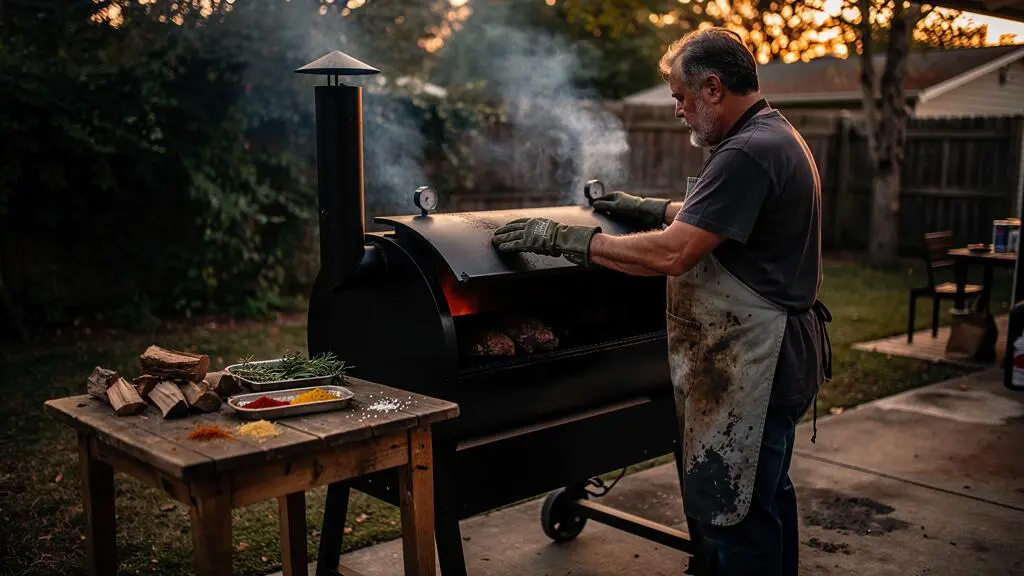
Smoke can smell powerful when a barbecue first starts yet seem less distinctive in the finished meat. That change does not necessarily mean the smoker has stopped delivering flavour. Smoke chemistry evolves over time, the meat surface changes as it dries and forms bark, and aroma compounds interact with fat, moisture, seasoning and heat. The result is a moving balance of smoky, savoury, sweet, spicy and sometimes bitter notes rather than one constant smoke flavour.
The practical solution is to treat flavour as a sequence of decisions. Wood establishes the smoky background, seasoning builds the savoury crust, and carefully chosen finishing aromatics can restore freshness close to serving. Each layer needs a purpose; adding more ingredients is not automatically an improvement.
There is also an important distinction between what a cook smells around the pit and what someone experiences when eating. These are different routes of olfactory perception, so an intense exhaust aroma cannot reliably predict the finished meat’s flavour. A better approach combines observation, small taste tests and deliberate adjustments, while recognising that the best timing depends on the cut, cooking conditions and desired texture.
The essentials of layered BBQ flavour
- Smoke aroma changes throughout a long cook; there is no universal two-hour point at which it stops contributing flavour.
- Build a hierarchy: one dominant aromatic, one supporting layer and one finishing accent.
- Evaluate the bark and the meat, manage salt separately from savouriness, and introduce delicate aromas late enough to remain perceptible at serving.
- Why Does Smoke Smell Strong Early but Taste Weaker Later in the Cook?
- How to Stage Aromatics in 3 Phases So the Finished BBQ Smells Fresh
- Wood Aroma or Spice Aroma: Which Works Better for Beef Short Ribs?
- The Too-Many-Aromatics Mistake That Makes BBQ Taste Confusing
- When Should You Vent the Wrapped Meat So Aroma Doesn’t Disappear Before Serving?
- How to Keep Aroma Fresh Through Resting and Holding Without Losing Layers
- How to Layer Savoury Seasoning in 2 Stages Without Overdoing Salt
- How to Build a Savoury Seasoning Crust That Doesn’t Taste Over-Salted After 8 Hours
Why Does Smoke Smell Strong Early but Taste Weaker Later in the Cook?
Smoke can smell stronger early in a cook because the mixture of volatile compounds reaching the nose changes as wood burns and meat cooks. Research on smoked chicken breast found that smoke-derived phenols dominated the volatile profile in early smoking stages, while other compounds appeared or declined as smoking continued. This supports the idea that smoke aroma evolves, but it does not establish that every barbecue loses flavour after exactly two hours.
Two sensory processes help explain the apparent mismatch. Orthonasal olfaction occurs when airborne aromas enter through the nose during inhalation. Retronasal olfaction occurs when aroma compounds released in the mouth travel towards the nasal cavity during eating. A pit that smells intensely smoky at the exhaust may therefore produce meat with a subtler, different or less balanced smoky impression.
Fat also changes the experience. Smoke-derived compounds can interact with the meat’s fat and surface, while rendering, moisture loss and bark formation alter the environment in which aromas are retained and released. These effects do not mean that all smoke compounds dissolve into fat in the same way or that fat guarantees a stronger final smoke flavour.
A practical mid-cook check is more informative than relying on smoke colour alone. Observe the exhaust, smell it briefly from a safe position, and assess a small sample of the bark when it is appropriate to do so. Consider whether the sample tastes smoky, savoury, bitter, ashy or comparatively bland. The exhaust and bark provide complementary clues, not a precise measurement of aromatic deposition.
Changes in smoke production are not the only explanation for a flat result. An overpowered smoke profile can mask spice, insufficient seasoning can leave the meat one-dimensional, and prolonged holding can dull the impression of fresh top notes. A recent experimental study of smoked chicken also found that aroma compounds and certain hazardous compounds followed different time-dependent patterns. Its findings are specific to the investigated conditions and do not establish a universal safe or flavour-optimal smoking duration for beef.
The key is to diagnose before adding more wood or seasoning. Once the smoke phase, surface development and existing flavour have been assessed, the next step is to decide which aromatic layer should be introduced, reinforced or left alone.
How to Stage Aromatics in 3 Phases So the Finished BBQ Smells Fresh
A useful three-phase method separates background smoke, developing savouriness and delicate finishing aromas. Start with clean, controlled smoke; build the seasoning character while the bark is developing; then introduce a restrained fresh accent near the end or at serving. This is a practical framework for making deliberate choices, not a scientifically validated schedule or a guarantee that late-added aromatics will always taste stronger.
Phase 1 — Establish the background. Begin with the wood character that suits the meat. Aim for a clean smoke profile rather than allowing dense, acrid smoke to dominate. Wood-derived aromas provide the foundation, and the early phase is the time to judge whether that foundation is mild, sweet, resinous or assertive enough for the intended dish.
Phase 2 — Develop the savoury layer. As the surface dries and the bark forms, evaluate the existing rub before adding anything. Pepper, garlic and other spices can support the meat’s savoury character. Fat rendering and surface moisture influence how the seasoning behaves, so the useful checkpoint is the state of the meat, not a rigid number of minutes. If the bark already tastes balanced, more seasoning may not be necessary.
Phase 3 — Refresh the top notes. Near the end, or immediately before serving, consider a small amount of citrus zest, fresh herbs, coarse pepper or a restrained vinegar-based accent. These ingredients contribute a different kind of freshness from long-cooked wood and spices. They can also be omitted when the dish already has sufficient contrast.
The order matters because volatile compounds differ in their behaviour under heat, and long cooking can change or diminish some delicate aromas. But the idea that all spices are fat-soluble, all wood aromas survive long cooks, or every fresh addition performs best at the end would be too broad. Ingredient composition, particle size, temperature, surface moisture and exposure time all affect the result.
Use observable checkpoints to guide transitions: whether the bark has set, whether fat is rendering, whether the surface is wet or dry, and whether the cook has entered the stall. These observations help determine when to reassess seasoning, wrap the meat or consider a finishing accent. They are decision points, not universal instructions to add ingredients at each stage.
Build a three-phase flavour plan
- Choose the wood profile and write down the intended dominant smoke character.
- Record the initial rub ingredients and their salt content on a seasoning card.
- Define the bark checkpoint that will trigger a mid-cook taste assessment.
- Select one possible finishing accent and record when it will be tested, rather than automatically adding it.
- After serving, note which layers remained perceptible and identify one adjustment for the next cook.
With the sequence established, the next decision is proportion. Wood and spices can both contribute strongly to barbecue flavour, but they perform different roles and need to be balanced against the richness of the cut.
Wood Aroma or Spice Aroma: Which Works Better for Beef Short Ribs?
Neither wood aroma nor spice aroma is universally better for beef short ribs. Rich, well-marbled ribs already bring substantial beef flavour and fat, so a measured smoke profile with a restrained spice crust can create balance. A milder preparation may benefit from more obvious seasoning. The right choice depends on which layer is missing from the finished flavour, not on a rule that smoke must always dominate.
Wood smoke can contribute phenolic, sweet, earthy or resinous notes, depending on the wood and combustion conditions. Oak, hickory and fruitwoods do not produce identical profiles, and the same wood can smell different when it burns cleanly versus when combustion is poor. Spice aromatics, meanwhile, bring their own range: pepper can add pungency, garlic can add a savoury edge, and cumin or chilli can introduce earthy or warm notes.
For beef short ribs, the most reliable approach is to assign each layer a job. Let the wood establish the background, then use the rub to shape the crust and the flavour experienced with each bite. Fat and surface conditions influence aroma release and retention, but they do not guarantee that smoke compounds will always overpower ground spices.
| Cooking situation | Wood approach | Spice approach |
|---|---|---|
| Rich, heavily marbled ribs | Use a controlled smoke profile that complements the beef. | Keep the rub focused so it supports rather than obscures the meat. |
| Milder or less fatty preparation | Build a measured background rather than relying on smoke alone. | Use a clearer spice profile to give the bite more definition. |
| Strong wood and assertive rub already selected | Avoid increasing smoke intensity without tasting the bark. | Reduce competing ingredients and keep one clear supporting note. |
A common pairing trap is combining a forceful smoke profile with a heavily smoked-paprika rub, several pungent spices and a flavoured spritz. Instead of producing a more complex rib, the combination can blur distinctions and leave a bitter or overly smoky finish. Heavy hickory or mesquite is not automatically unsuitable, but the overall intensity deserves attention during a long cook.
To check the balance, taste a small piece of bark with some meat and fat. First assess the beef, then the smoke, then the spice. If the smoke is all that remains perceptible, avoid adding more smoke or rub; consider reducing one dominant element next time. This is a sensory comparison, not a laboratory measure of aroma concentration.
That hierarchy also explains why adding many individually appealing ingredients can backfire. A layered barbecue needs contrasts that remain recognisable, not the largest possible number of aromas.
The Too-Many-Aromatics Mistake That Makes BBQ Taste Confusing
Barbecue can taste loud but muddled when several powerful aromatic ingredients compete for attention. A forceful wood smoke, a complex rub, a flavoured spritz and a heavily seasoned wrapping liquid may each contribute something useful in isolation, yet their combined effect can obscure the beef and make the final profile harder to read. More aromatic inputs do not necessarily produce more perceptible complexity.
A practical safeguard is to set a hierarchy before lighting the fire: one dominant aromatic, one supporting aromatic and one finishing accent. The dominant layer might be the wood profile; the supporting layer might be black pepper and garlic; the accent might be a restrained citrus note. Other ingredients can still be present, but each should have a clear purpose rather than duplicating an existing note.
Several combinations deserve particular scrutiny:
- Overlapping smoke and rub: forceful wood smoke paired with heavily smoked paprika can push the overall profile towards a single smoky impression.
- Competing spritz flavours: a flavoured liquid can add acidity or moisture while introducing aromas that fight the existing crust.
- Excessive wrap additions: concentrated juices and seasonings may change the surface and soften the bark, making the original layers less distinct.
- Too many finishing accents: multiple herbs, citrus, sauces and spices can compete instead of refreshing the meat.
When the result is already confusing, avoid trying to rescue it with another strong ingredient. Taste a small portion of bark and meat separately, then identify which note is dominant, which is absent and which is unpleasant. If smoke is bitter or ashy, adding fresh herbs will not remove the underlying smoke character. If the meat is simply flat, a focused savoury or acidic accompaniment may help more than another layer of seasoning.
A useful learning technique is to change only one element on the next cook. Reduce the smoke intensity or simplify the rub, while keeping the other major choices stable. This makes it easier to recognise which change improves the result and prevents a succession of adjustments from becoming impossible to evaluate.
Once the aromatic hierarchy is under control, attention can shift to wrapping and resting. These stages affect moisture and bark texture, and they can change how the finished aroma is perceived.
When Should You Vent the Wrapped Meat So Aroma Doesn’t Disappear Before Serving?
Vent wrapped barbecue when the meat has reached the desired tenderness and the immediate steam release has eased enough for the intended rest, rather than following a universal number of minutes. Opening a wrap releases heat and moisture; leaving meat enclosed can preserve warmth but may soften the bark. There is no established aroma-specific venting temperature or timing in the supplied evidence, so the decision should balance tenderness, carryover cooking, moisture and surface texture.
Wrapping is often used to reduce evaporative cooling and accelerate a long cook. Foil creates a relatively closed environment in which the meat can soften in retained juices, whereas butcher paper absorbs some moisture and fat and generally offers a different balance between cooking speed and bark texture. These are meaningful differences for the eating experience, but they do not by themselves establish exactly where each aromatic molecule travels.
During resting, hot meat continues to release water vapour and volatile compounds. Some aroma compounds can interact with moisture and fat on the surface, but it would be too strong to claim that all useful aromas reliably recondense onto the meat or that waiting for steam to stop guarantees their retention. A venting decision is therefore best treated as a practical texture-and-serving choice, not a proven chemical preservation method.
Use the condition of the meat as the guide. If the bark is already soft and the meat is tender, a period of uncovered resting may help the surface dry. If the meat needs a longer hold, avoid exposing it for so long that it cools excessively. Carving close to serving can also limit the time that a large exposed surface loses heat and moisture.
The specialist guide to the Texas crutch and the differences between foil and butcher paper explains the trade-off between faster cooking, retained moisture and bark softness. It is useful practical guidance, not a direct experiment measuring aroma loss during venting.
Venting is only one part of the serving window. A well-managed wrap cannot fully compensate for a long hold that dulls fresh accents, so resting and holding deserve their own flavour plan.
How to Keep Aroma Fresh Through Resting and Holding Without Losing Layers
Aroma can become less vivid during a long hold even when the meat remains tender. Heavy, persistent flavours may still be apparent while delicate top notes from citrus zest, fresh herbs or freshly ground pepper become less noticeable. The exact pattern depends on the ingredients, temperature, time, exposure to air and moisture, so there is no universal ranking that applies to every barbecue cut.
The aim of holding is to preserve the meat’s eating quality without sacrificing the crust or introducing a new set of competing flavours. A wrapped hold generally retains moisture and warmth but can soften the bark, especially when the wrap traps liquid. Holding in a cooler can slow heat loss when properly managed, but the aroma outcome depends on the actual holding conditions. Reheating may restore serving temperature and some surface texture, yet it can also drive off volatile compounds and alter the crust.
| Method | Main benefit | Trade-off to monitor |
|---|---|---|
| Wrapped hold | Retains heat and moisture. | Condensation and trapped juices can soften bark. |
| Insulated cooler hold | Can help maintain warmth without continuous cooking heat. | Actual temperature and duration need monitoring; texture and aroma depend on conditions. |
| Reheating before serving | Restores serving temperature when the meat has cooled. | Additional heat can change surface texture and diminish some volatile aromas. |
For a long hold, keep the flavour plan simple. Avoid adding several fresh ingredients to the wrap in the hope that their aromas will survive unchanged. Instead, retain the dominant smoke and savoury profile and consider a small amount of the same finishing accent chosen earlier, added close to serving if it suits the dish. That creates continuity rather than introducing an unrelated flavour at the last moment.
Before serving, smell the meat and taste a small piece with bark, meat and fat together. A flat first impression may reflect faded top notes, while an unpleasant ashy impression can indicate an overly assertive smoke profile or another flavour imbalance. These sensory cues are not definitive diagnoses, but they help distinguish a need for freshness from a need to simplify the underlying flavour.
After managing aroma through cooking and resting, the remaining challenge is savouriness. Salt can move into meat over time, but the crust’s final salt perception also depends on moisture loss, seasoning composition and the way the meat is served.
À retenir
- Set a total salt target before dividing seasoning between early and late applications.
- Evaluate the bark during cooking rather than assuming its saltiness will remain unchanged.
- Use a savoury ingredient or a serving contrast to address a flat or overly salty result, instead of automatically adding more salt.
How to Layer Savoury Seasoning in 2 Stages Without Overdoing Salt
Two-stage seasoning can help separate the purpose of early salting from a possible finishing adjustment. Early salt has more time to migrate into the meat, whereas a late application primarily changes the surface and the seasoning experienced on the first bite. The ideal split depends on cut size, existing salt in the rub, cooking method and wrapping choices; the available evidence does not establish a universal early-to-late ratio for barbecue.
Salt movement in beef is a real physical process. A research study on sodium chloride diffusion during brining used experimental measurements and a three-dimensional model to examine changes in salt concentration over time. That supports the principle that salt does not remain exclusively at the surface. However, brining differs from dry-rubbing meat for a long barbecue cook, so the study cannot determine an ideal rub dose or validate a specific two-stage schedule.
Begin by defining the total salt intended for the entire cut. Account for salt already present in commercial rubs, seasoned binders and other ingredients. If the initial seasoning provides enough salt for the target, a second application may be unnecessary. A late sprinkle should be a deliberate correction, not an automatic extra dose added on top of an unchanged initial quantity.
Wrapping also matters. Retained liquid can redistribute surface seasoning and change the taste and texture of the bark. A surface that initially tastes balanced may later seem concentrated or washed out depending on how much moisture is lost or retained and what enters the wrap. This is why the decision to add more salt should follow a taste assessment rather than a fixed point on the cooking clock.
Saltiness and savouriness are not the same thing. Salt contributes salinity, while savoury depth can come from meat itself and ingredients that contribute umami, such as dried mushrooms or tomato. Small amounts of ingredients such as fish sauce can add savoury complexity but may also contribute significant salt, so their contribution needs to be included in the overall seasoning plan.
Even a sensible salt plan can produce a crust that tastes more concentrated after many hours of cooking. The final step is to understand the crust itself and make corrections before a surface imbalance becomes difficult to reverse.
How to Build a Savoury Seasoning Crust That Doesn’t Taste Over-Salted After 8 Hours
A savoury crust that stays balanced through a long cook begins with controlled seasoning and regular observation. Surface moisture loss can concentrate ingredients left on the bark, so a rub that tastes balanced at the start may taste more intense later. The phrase “after 8 hours” describes a possible cooking scenario, not a universal threshold: concentration depends on the cut, temperature, airflow, wrapping and duration of the cook.
The binder, particle size and sugar content all influence the result. A thin layer of oil, mustard or rendered fat can help seasoning adhere, but the binder should not be assumed to determine the final aroma on its own. Coarse salt and pepper can contribute a more noticeable surface texture, while finer particles behave differently as moisture reaches them. Sugar can darken and, under sufficiently hot conditions, burn, so its amount and exposure need to suit the cooking method.
The most useful control is to assess the crust before making another seasoning decision. When the bark has developed enough to sample, taste a small scraped portion and judge both saltiness and savouriness. If the meat tastes flat but the crust is already salty, more salt is unlikely to solve the problem. A small savoury accent, an acidic counterpoint or a more balanced accompaniment may be a better direction, depending on the dish.
For a future cook, keep the salt target stable and change one variable at a time. Record the initial rub, whether it contains sugar, the bark condition at the taste checkpoint, the wrapping method and the final impression. These observations will be more useful than attempting to calculate a universal concentration from elapsed cooking time alone.
If the finished crust is over-salted, there is no reliable way to remove salt that has become part of the surface without sacrificing some bark. Trimming the outermost layer may help in some cases; serving with an unsalted, acidic or fatty accompaniment can also rebalance each bite. Avoid presenting either approach as a complete correction for a heavily over-salted crust.
To put the method into practice, start with a clearly defined salt target, a focused rub and a planned mid-cook taste check. Treat every later addition as a choice that needs evidence from the meat rather than as an obligatory step.
The most repeatable barbecue flavour comes from separating diagnosis from adjustment: first identify whether the issue is smoke, spice, salt, moisture or holding, then change the smallest relevant part of the process. That approach makes each cook a more useful lesson in intentional flavour design.
Does smoke flavour stop developing after two hours?
No universal two-hour limit is established by the available evidence. The volatile profile of smoke can change during cooking, and different compounds may appear or decline at different stages. The effect on finished meat depends on the wood, combustion conditions, meat surface, fat, cooking method and duration.
Should fresh herbs and citrus be added before or after smoking?
For a pronounced fresh aroma, test a small amount near the end of cooking or immediately before serving. Long exposure to heat can change delicate aromas, but late additions are not automatically better for every recipe. Use them only when they complement the smoke and seasoning already present.
Can beef fat make smoked meat taste smokier?
Fat affects the behaviour and perception of aroma compounds, but it does not guarantee a stronger smoky flavour in every cut. The final impression also depends on the smoke profile, surface bark, seasoning, cooking conditions and how the meat is served.
Does butcher paper preserve aroma better than foil?
There is insufficient evidence here to declare one wrapping material universally better for aroma retention. Foil tends to retain moisture more tightly, while butcher paper absorbs some moisture and fat and can produce a different bark texture. Choose according to the desired balance between cooking speed, moisture and crust, then assess the finished result.
What should be changed first if the bark tastes too salty?
Do not automatically add more seasoning. Check the total salt from the rub and other ingredients, how the bark developed, and whether wrapping or moisture loss changed its concentration. For the next cook, reduce or redistribute the salt deliberately; for the finished dish, an unsalted accompaniment or a suitable acidic or fatty contrast may improve the balance.