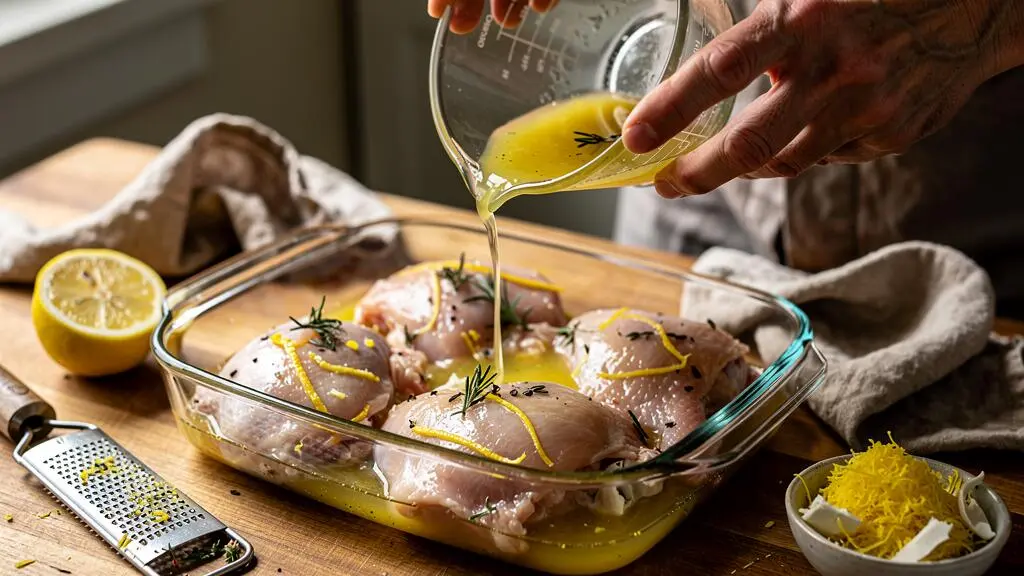
A citrus-herb marinade can give barbecue chicken the bright, fresh flavour of lemon, lime or orange without sacrificing its texture. The secret is to control how much acidic juice reaches the meat, how long it stays there and what happens to the marinade when the chicken meets the grill.
For a 2–6-hour marinating window, start with a modest amount of citrus juice, enough oil to distribute the herbs, and salt measured against the chicken rather than the liquid. Use zest to build fragrance without relying entirely on acidity. Thin chicken breasts generally need less exposure than thick, bone-in thighs, particularly when the marinade tastes sharply sour.
There is no universal six-hour guarantee for citrus marinades. A gentle mixture may remain suitable for several hours, while a concentrated lemon or lime mixture can alter the surface much sooner. Keep the chicken refrigerated, drain the excess marinade before grilling and finish with fresh herbs or a separately prepared citrus sauce. That combination gives you better control over tenderness, browning and flavour.
Citrus-herb chicken marinade: the essentials
- Keep citrus juice relatively modest, use zest for extra aroma, and adjust marinating time to the acidity and thickness of the chicken.
- Let salt handle seasoning and moisture retention; more acidic marinating time does not automatically mean more flavour.
- Remove excess marinade before grilling, cook with an indirect-heat option available, and keep sweet glazes and delicate herbs for the finish.
- Why Does Citrus Marinade Make Chicken Texture Soft After Just 3 Hours?
- How to Balance Citrus, Oil, and Salt in a Marinade Without Guessing Ratios
- Lemon, Lime, or Orange: Which Citrus Works Best for Thighs vs Breast?
- The Zest Mistake That Makes Citrus Marinade Taste Bitter on the Grill
- When Should You Start Marinating for a 7 pm BBQ if You Want Maximum Flavour?
- How to Choose Marinade Time Based on Thickness So You Don’t Guess
- How to Use Herb Bundles and Indirect Heat So the Aroma Infuses Without Burning
- How to Use Aromatic Herbs on the Grill Without Burning Them in 2 Minutes
Why Does Citrus Marinade Make Chicken Texture Soft After Just 3 Hours?
Citrus marinade can make chicken soft because its acid changes proteins near the meat’s surface. Three hours is not a universal limit: a concentrated lemon or lime marinade can affect texture relatively quickly, whereas a milder mixture may remain suitable for longer. Acid concentration, chicken thickness and exposure time matter more than the clock alone.
Citric acid lowers the pH around the chicken and causes proteins to denature, meaning their structure changes. Heat also denatures proteins, but acid exposure is not equivalent to cooking chicken safely. With prolonged contact, a strongly acidic marinade can produce an increasingly opaque, softened exterior that contrasts with the less affected meat underneath.
This is different from what salt does. Salt can diffuse farther into muscle tissue and improve seasoning and moisture retention. Citrus juice mostly acts near the surface, while herbs contribute flavour primarily to the exterior. Prolonging a sharply acidic marinade cannot reliably compensate for insufficient salt or deliver citrus flavour deep into a thick chicken breast.
In Serious Eats‘ experiments on the science of marinades, chicken breast samples received different marinating times. Tasters generally preferred samples marinated for one to eight hours in the relatively mild mixture tested, with a slight preference for four hours. After 24 hours, the texture was described as undesirably rubbery and ham-like. These findings illustrate how time can affect meat, but the main timing experiment did not test a strongly acidic citrus marinade.
To assess your own marinade, consider its sharpness, the thickness of the cut and the time already elapsed. A slightly whitened exterior can result from acid exposure. However, opacity or slipperiness cannot reliably establish whether the chicken has been marinated optimally or is safe to eat. An unusually soft surface may be a reason to stop acid exposure, but sliminess or an off smell can also indicate spoilage; if spoilage is suspected, discard the chicken rather than attempting to rescue it.
Keep the container refrigerated throughout. The fridge slows bacterial growth, but it does not stop the chemical effects of citrus acid. When in doubt about a particularly sharp mixture, choose a shorter exposure and bring the remaining brightness to the finished dish with fresh citrus.
The next decision is therefore not simply how many hours to marinate, but how to build a mixture in which the acid, oil and salt each perform a specific job.
How to Balance Citrus, Oil, and Salt in a Marinade Without Guessing Ratios
Balance a citrus-herb marinade by assigning each ingredient a job instead of following a universal liquid ratio. Citrus juice supplies acidity, oil spreads aromatic ingredients across the surface, and salt seasons the chicken and supports moisture retention. For longer marinating windows, reduce reliance on acidic juice and use zest to maintain citrus aroma.
Begin with the chicken itself. Salt should be considered in relation to the amount of meat, rather than the total quantity of oil and juice in the bowl. Otherwise, adding more liquid can accidentally dilute the seasoning without changing how much chicken needs to be seasoned.
Next, decide how prominent the citrus should be. A short marinade can accommodate a more noticeable juice component. If the chicken will remain refrigerated in the mixture for several hours, make oil and herbs the main flavour base and use a smaller quantity of juice. This is a practical formulation strategy, not a scientifically established acid-to-oil ratio.
Oil helps distribute fat-soluble aromatic compounds and coat the chicken’s surface. It can also help with heat transfer during cooking. However, oil does not form a dependable barrier preventing acid from reaching the meat, so adding extra oil is no substitute for controlling marinating time.
The different ingredients can be managed according to their contribution:
| Ingredient | Main purpose | Practical adjustment |
|---|---|---|
| Citrus juice | Acidity and bright flavour | Use less for longer exposure or delicate cuts. |
| Citrus zest | Concentrated peel aroma | Increase citrus fragrance without adding as much acidic liquid. |
| Oil | Surface coating and aroma distribution | Use enough to coat, without leaving the meat dripping before grilling. |
| Salt | Seasoning and moisture retention | Measure consistently against the chicken’s weight. |
| Fresh herbs | Surface aroma | Choose woody herbs for prolonged contact and delicate herbs for finishing. |
| Sugar or honey | Sweetness and browning | Prefer a separate sauce or late glaze to limit scorching. |
Sugars deserve particular attention on the barbecue. Natural citrus sugars and added sweeteners can brown and eventually scorch on a hot grate before thicker chicken pieces finish cooking. Meanwhile, dripping fat and oil can ignite and cause flare-ups independently of sugar. A sweet marinade therefore presents both a surface-burning concern and, when it contains excess oil, a potential dripping-fuel concern.
For fresh summer chicken, try combining olive oil, finely prepared zest, thyme or rosemary, measured salt and a modest squeeze of lemon. Mix the ingredients before adding the chicken, taste and adjust the mixture before it contacts raw poultry, then refrigerate. There is no need to make the liquid aggressively sour for it to deliver citrus character.
Once the balance is established, the citrus variety becomes another useful adjustment: lemon, lime and orange offer different flavour profiles as well as different considerations for the grill.
Lemon, Lime, or Orange: Which Citrus Works Best for Thighs vs Breast?
Lemon and lime are useful for boldly flavoured chicken thighs, while orange can provide a softer citrus impression for delicate chicken breasts. This is a culinary pairing rather than a fixed scientific rule: juice acidity varies between fruits, and the marinade’s overall concentration matters more than the fruit’s name alone.
Chicken thighs offer a richer eating experience because they contain more fat and connective tissue than lean breast meat. That makes assertive citrus and aromatic herbs appealing from a flavour standpoint. Nevertheless, thighs are not immune to acid-related surface changes, and leaving them in concentrated lemon juice for too long can still damage their texture.
Breast meat is leaner and often cooked in thinner portions. A gentler orange-and-herb marinade can complement its mild flavour without overwhelming it. Orange juice generally tastes sweeter and less sharply acidic than lemon or lime, but it still contains acids and is not a guarantee against over-marination.
Choose the citrus according to the meal you want:
- Lemon with thyme or rosemary: a savoury, familiar pairing for chicken thighs, drumsticks and breast fillets. Use zest when you want fragrance to dominate over sourness.
- Lime with coriander or mint: a brighter, greener combination that suits boneless thighs and grilled chicken served with fresh salads. Add tender herbs later to preserve their character.
- Orange with thyme or parsley: a rounder, slightly sweeter option for breasts or family-style chicken skewers. Keep a close eye on browning over direct heat.
Orange’s sweetness introduces a cooking trade-off. Residual orange juice can encourage surface browning, but its sugars may also scorch over prolonged high heat. This is especially noticeable when a sweetener such as honey is added. Drying the chicken’s exterior and reserving sweet elements for the final stage of cooking help protect the flavour.
If you have a long preparation window, the more useful decision is often juice versus zest, not simply orange versus lemon. Using more of the coloured peel and less juice builds citrus aroma while reducing the marinade’s acidic liquid component.
For very thin breast fillets, begin with a shorter citrus exposure even when using orange. For thicker thighs, a longer window may be practical if the mixture is mild. Neither cut requires the maximum possible marinating time to taste fresh and aromatic.
After choosing the fruit, pay attention to how you remove its peel. The wrong part of the zest can introduce bitterness that becomes particularly unwelcome once the chicken is grilled.
The Zest Mistake That Makes Citrus Marinade Taste Bitter on the Grill
The most common zest-related mistake is grating through the fragrant coloured peel into the white pith underneath. The outer layer provides valuable citrus aroma, while the pith may taste bitter. Remove only the coloured surface, and avoid leaving thick pieces of white peel in a marinade intended for grilling.
Zest is especially useful when you want the flavour of lemon, lime or orange without adding large amounts of juice. Its aromatic oils create a recognisable citrus scent that works well with rosemary, thyme and other barbecue herbs.
The University of Illinois Extension advice on citrus zest recommends washing and drying citrus fruit before removing only the outer peel. The underlying white pith can contribute unwanted bitterness.
Two preparation methods offer different advantages:
- Finely grated zest: distributes small aromatic particles throughout the mixture. Use a light touch and rotate the fruit before the white pith becomes exposed.
- Broad strips of zest: can be removed with a vegetable peeler or small knife, giving you greater control over which parts of the peel remain in the marinade. Inspect the underside and trim away noticeable white pith.
A fine grater works well for marinades that will coat individual chicken pieces. Broad strips are useful when the oil and herbs will infuse before cooking and you intend to remove the peel before it meets the barbecue. Both approaches can provide excellent aroma; neither requires squeezing in extra juice.
Bitterness from pith is a different problem from bitterness caused by burning. Even correctly prepared zest and herb particles may scorch if they remain exposed to intense direct heat. As moisture evaporates during cooking, unpleasant flavours can also become more noticeable, although the degree of concentration depends on how much marinade remains on the meat.
To catch a flavour problem early, taste the freshly mixed marinade before adding raw chicken. If it already tastes distinctly bitter, remove any visible pith and consider preparing a fresh batch rather than trying to conceal the problem with sugar. Extra oil or a small seasoning adjustment may soften the perception of bitterness, but neither reliably removes bitter compounds.
Never taste marinade after it has contacted raw chicken. A clean tasting spoon and a separate mixing bowl make it easier to assess the flavour safely before marinating begins.
Once the zest is prepared correctly, planning becomes easier. You can use aromatic peel for a longer preparation period without leaving the chicken exposed to a strong dose of citrus juice throughout.
When Should You Start Marinating for a 7 pm BBQ if You Want Maximum Flavour?
For a 7 pm BBQ, work backwards from the time the chicken needs to go on the grill, allowing for cooking, draining and drying the marinade. A mild citrus-herb mixture might suit several hours in the fridge, but a strongly acidic version calls for a shorter window. Maximum flavour does not mean maximum acid exposure.
First decide whether 7 pm means starting to grill or serving dinner. For chicken pieces that need a substantial period over indirect heat, marinating must finish before cooking begins, not at the serving time. Keep the chicken refrigerated until preparation for cooking; there is no need to leave raw chicken out for an extended period to bring it to room temperature.
For illustration, the following is a hypothetical planning schedule for a barbecue where cooking starts at 7 pm. The timings are organisational examples, not experimentally validated marinating limits.
| Time | Task | Purpose |
|---|---|---|
| 1 pm | Prepare a mild oil, zest, herb and salt mixture; refrigerate the chicken. | Start developing surface aroma without an extended strong-acid exposure. |
| 4 pm | For a shorter acidic stage, add a modest amount of citrus juice if the recipe calls for it. | Introduce brightness later rather than exposing the meat to juice for the whole period. |
| 6:30 pm | Remove the chicken from the marinade and pat away excess liquid. | Prepare the surface for browning and reduce dripping. |
| Before 7 pm | Prepare a direct-heat zone and an indirect-heat zone. | Give yourself control over browning and flare-ups. |
| 7 pm | Begin grilling and monitor the thickest part with a food thermometer. | Cook according to the cut’s thickness rather than a fixed clock time. |
A staged approach is helpful when preparation must begin early. Instead of soaking the chicken in acidic juice throughout the afternoon, use a non-acidic or low-acid mixture of oil, herbs, zest and salt first, then add the juice for a shorter final stage.
Simply draining off lemon juice from an already mixed marinade does not stop acid exposure completely: acidic liquid remains on the meat and in the coating. To control exposure more precisely, keep the citrus juice separate until the planned acidic stage.
Food safety also belongs in the schedule. Marinade that has contacted raw chicken must not be served as an uncooked sauce. The USDA FSIS guidance on reusing chicken marinade says it must first be boiled to destroy bacteria. The simpler option for a fresh finishing sauce is to reserve a separate portion before any raw poultry is added.
A final squeeze of fresh lemon or lime after grilling can also restore brightness without extending the marinating time. It makes particularly good sense when the chicken has been cooking over charcoal and already carries smoky, herbal flavours.
Five checks for a 7 pm citrus-herb BBQ
- Write down whether 7 pm is the grilling or serving time. Your deliverable is a clear cooking start time.
- Identify the thickest chicken piece and whether it is bone-in or boneless. Your deliverable is the cut that will determine your cooking plan.
- Prepare and label the oil-herb-zest mixture and any citrus juice kept separate. Your deliverable is a controlled acidic stage.
- Set a reminder to drain and pat the chicken dry before grilling. Your deliverable is a surface ready for browning.
- Reserve clean finishing sauce before handling raw chicken and prepare a food thermometer. Your deliverable is a safe finishing and doneness check.
The schedule becomes more reliable when it is based on the meat’s actual thickness. Two chicken pieces of similar weight may behave differently in both the marinade and the heat.
How to Choose Marinade Time Based on Thickness So You Don’t Guess
Use chicken thickness to guide citrus marinating time because acidic flavouring acts mainly on exposed surfaces rather than penetrating uniformly to the centre. Thin fillets have more surface exposure relative to their volume and can develop an altered texture sooner. Thick thighs and drumsticks may tolerate a longer mild marinade, but more time will not necessarily season their centres.
Weight alone tells you relatively little about the way a marinade interacts with the chicken. A broad, thin breast and a compact, thick thigh may weigh the same, yet the breast exposes proportionally more muscle to the marinade.
For a practical comparison, inspect the thickest point of each cut. If thickness is difficult to judge, use a separate representative piece or measure at an exposed edge without repeatedly cutting into the meat you intend to serve.
The useful distinction is between three preparations:
- Thin escalopes and flattened breast fillets: use a shorter acidic exposure and a mild mixture. Their large exposed area makes surface flavour easy to develop.
- Regular boneless thighs or breast portions: allow a moderate window when the marinade is not aggressively sour, adjusting for variations in thickness.
- Thick, bone-in thighs and drumsticks: use a longer low-acid herb-and-salt stage if needed, but do not assume that additional citrus exposure will flavour the centre.
These are relative choices, not validated hour-by-hour cutoffs. A thin fillet in concentrated lime juice may change at the surface faster than a thicker piece in a predominantly oil-and-zest mixture.
Butterflying a breast or flattening it between sheets of suitable food-safe material reduces its thickness and exposes more surface area. This offers a practical way to achieve noticeable marinade flavour with less time. Even thickness also helps the fillet cook more evenly, which is particularly useful over a barbecue where the hot spots vary.
Practical example: two cuts, one marinade
Imagine preparing a flattened breast fillet and a bone-in thigh for the same evening barbecue. Both receive the same mild herb, zest and oil mixture, but the breast is given a shorter citrus-juice stage while the thigh remains in the non-acidic mixture for longer.
This hypothetical method lets you tailor acid exposure to the available surface area without claiming the centre of either cut absorbs citrus flavour deeply. The thigh can receive extra brightness from a clean finishing sauce after cooking.
Even when a thick piece has marinated for hours, the centre may taste comparatively plain. That is normal for many aromatic marinades. Salt can diffuse into meat, but the larger aromatic molecules associated with herbs and zest mainly contribute near the surface.
A spoonful of herb dressing, a fresh citrus squeeze or herb butter served with the cooked chicken can bridge that flavour difference. A finishing sauce is often more effective than extending a strong acidic marinade for another few hours.
Once the cut and timing are settled, attention shifts to the grill itself. Good flavour can still be lost if aromatic herbs or residual marinade scorch over direct heat.
How to Use Herb Bundles and Indirect Heat So the Aroma Infuses Without Burning
Use whole sprigs of sturdy herbs and a two-zone barbecue to introduce herbal aromas without exposing delicate leaves to intense direct heat. Place chicken over indirect heat when it needs gentle cooking, and keep herb bundles away from open flames. On a charcoal grill, controlled aromatic smoke can complement the herbs already coating the meat.
A bundle of rosemary, thyme or bay offers a different effect from chopped herbs in a marinade. Chopped leaves season the surface; whole woody sprigs can release fragrant compounds as they warm. When exposed to glowing charcoal, they may also produce aromatic smoke, although direct contact with very hot coals can burn them rapidly.
For a charcoal barbecue, arrange a concentrated bed of coals on one side and leave the opposite side free of direct fuel. The hot side is available for browning, while the cooler side provides a more forgiving cooking environment for chicken that needs time to reach its target internal temperature.
Rather than scattering delicate leaves directly onto flames, place a small bundle of woody sprigs near the hot zone where it can warm or smoulder under supervision. Position the chicken on the indirect side, where the circulating hot air and any light aromatic smoke can reach it. This is an optional flavour technique, not a validated method for measuring herb infusion.
Keep any bundle small, use tongs to position it and avoid materials that are unsuitable for direct charcoal contact. Remove it if it produces harsh, heavy smoke or catches fire. Herbs should supplement controlled cooking rather than become another source of uncontrolled flames.
There are two complementary approaches to aromatic herbs on the barbecue:
| Feature | Herbs in the marinade | Herbs near the heat |
|---|---|---|
| Main contribution | Season and perfume the meat’s surface. | Add an aromatic element to the cooking environment. |
| Suitable herbs | Thyme, rosemary and other compatible culinary herbs. | Whole woody sprigs, especially thyme and rosemary. |
| Main risk | Exposed chopped leaves scorching on the grate. | Excessive smoke, ignition or burnt-herb bitterness. |
| Practical control | Remove excess loose leaves before high heat. | Keep bundles away from flames and monitor them. |
Indirect cooking also helps manage flare-ups. With chicken away from the concentrated heat source, dripping fat or marinade is less likely to fall directly onto glowing fuel underneath the meat. That does not eliminate fire risk, but it gives you room to respond if flames rise.
For marinated chicken, draining and drying the exterior before cooking remains important. A thin coating of oil and herbs can enhance flavour, while dripping pools of marinade can interrupt browning and contribute to unwanted smoke.
If you prefer gas grilling, a similar two-zone arrangement can be created using the burners according to the grill manufacturer’s instructions. The principle remains the same: separate the zone used for browning from the gentler area used to finish cooking.
Whole sprigs and indirect heat provide one layer of protection, but the herbs attached directly to the chicken need their own timing and positioning strategy.
Key takeaways before the chicken meets the grill
- Choose where each herb belongs: in the marinade, beneath the skin, near the heat or on the finished plate.
- Make the chicken’s surface ready to brown before applying intense heat; a wet coating of herbs and juice is not automatically beneficial.
- Keep a gentler cooking zone available so the meat can finish safely even when the exposed herbs or coating begin to darken.
How to Use Aromatic Herbs on the Grill Without Burning Them in 2 Minutes
To prevent aromatic herbs from burning on the grill, protect them from prolonged direct flame and add delicate leaves at the right stage. Woody herbs such as rosemary and thyme can flavour marinades before cooking, while basil, parsley and coriander generally work better as fresh finishing ingredients. If exposed herbs blacken too quickly, move the chicken to indirect heat.
Fresh leaves contain moisture, but that moisture evaporates rapidly in the intense heat of a barbecue. Once the leaves dry out, their delicate structure can char, replacing fresh herbal aroma with bitterness. Finely chopped leaves are particularly vulnerable when scattered directly on a hot grate.
Oil helps distribute herbal flavour and coat the meat, but it does not make exposed leaves fireproof. A thick layer of chopped herbs attached to a wet chicken breast can still burn before the centre of the meat is fully cooked.
The most dependable strategy is to decide when and where each herb should be used:
- Before marinating: use rosemary, thyme or sage in the oil-based mixture to develop a savoury herbal coating.
- Before grilling: remove large loose herb fragments likely to fall onto the coals and pat away excess liquid.
- During cooking: keep woody herbs protected beneath the chicken skin where appropriate, or use indirect heat to limit scorching.
- After grilling: scatter chopped parsley, coriander, basil or mint over the cooked chicken for a fresh, vivid finish.
For skin-on chicken, slipping a few clean thyme or rosemary sprigs beneath the skin is another option. Gently lift the skin without tearing it and place the herbs between the skin and the flesh, avoiding excessive stuffing. This shields the leaves from direct flame and puts their fragrance close to the meat during cooking.
Another protective technique is wrapping a suitable chicken portion with a thin slice of bacon, with herbs tucked inside. The bacon creates a layer between the leaves and direct heat, although it also adds fat and salt, changes the flavour profile and may require more careful management of drips and flare-ups. It is not essential for a successful citrus-herb barbecue.
Cooking conditions remain more important than any single herb trick. If the exposed leaves turn black well before the chicken is cooked, move the meat away from direct heat rather than repeatedly basting it with more oil or marinade. Additional liquid may produce smoke, encourage dripping and make browning less predictable.
A thermometer offers a more reliable doneness check than the colour of herbs, juices or meat alone. For UK home cooking, chicken should be thoroughly cooked; a practical Food Standards Agency benchmark is a core temperature of 75 °C for 30 seconds, or an equivalent safe time-temperature combination, measured at the thickest part without touching bone.
Once the chicken is cooked, let it rest briefly and finish with clean chopped herbs, fresh zest or a separate citrus dressing. This final addition provides the bright aroma that prolonged direct heat tends to diminish.
For your next barbecue, prepare a mild citrus-herb base, match the acid exposure to the cut, dry the surface before grilling and save the most delicate flavours for the finish. These small decisions give you more control over fresh summer flavour than simply leaving the chicken in the marinade for longer.
Can chicken stay in a citrus-herb marinade overnight?
An overnight marinade containing a substantial amount of lemon or lime juice is not the best default for delicate chicken cuts. Prolonged acid exposure may alter the surface texture. For advance preparation, keep the chicken refrigerated in a lower-acid mixture of salt, herbs, oil and zest, then add citrus juice closer to cooking. Refrigeration is essential throughout.
Can you freeze chicken in a citrus marinade?
Chicken can be frozen with suitable marinade ingredients, but freezing is not a reliable way to correct an excessively acidic recipe. Acid contact may occur before freezing and again during thawing. A practical option is to freeze chicken with a mild herb-and-oil mixture and add fresh citrus after safe thawing in the fridge. The supplied food-science evidence does not establish a specific frozen citrus-marinating duration.
Does adding more olive oil stop lemon juice from softening chicken?
No. Olive oil can help coat chicken and distribute aromatic flavours, but it does not reliably block acid from contacting the proteins. To reduce unwanted texture changes, control the concentration of acidic juice and shorten exposure where necessary. Using citrus zest for additional fragrance can reduce reliance on juice.
Should you rinse citrus-marinated chicken before putting it on the BBQ?
No. Washing raw chicken is unnecessary and can spread bacteria through splashing. Remove it from the marinade, discard the used liquid unless it will be properly boiled for sauce, and pat the exterior dry with disposable kitchen towel. Wash hands, utensils and surfaces that have contacted raw poultry, and cook the chicken thoroughly.
How can you add stronger citrus flavour after the chicken is cooked?
Finish with freshly grated coloured citrus zest, a squeeze of lemon or lime, or a separate herb dressing that has never touched raw chicken. Adding these ingredients after grilling delivers fresh aroma without further acid exposure during marinating and reduces the risk of burning citrus sugars or herb particles over direct flame.